

Why Use a Cap Stapler for House Wrap?

Modern construction demands durable, code-compliant, and weather-resistant installations—and house wrap plays a major role. Whether you’re wrapping a new build in Tyvek-style membrane or replacing a torn section behind siding, the right fastening tool can make all the difference. One option that’s become essential for professional installers is the cap stapler—a fastener system that improves hold strength, reduces tearing, and helps ensure the long-term performance of your weather-resistive barrier.
What Is a Cap Stapler?
A cap stapler is a pneumatic or manual stapler that drives a staple through a plastic cap, securing materials like house wrap, foam board, or roofing underlayment. These tools provide a solution to one of the most common challenges: keeping the underlayment securely fastened in all weather conditions while minimizing the risk of tearing, water intrusion, or premature material failure.
Cap staplers feed a roll of collated plastic caps into the tool alongside each staple. With each trigger pull, the staple and cap are driven together in one smooth motion. Compared to hand-driven cap nails and hammer-tacker cap staplers, pneumatic cap staplers experience far fewer misfires and drastically increase speed and reduce fatigue. They also help meet the fastening specs now required by most house wrap manufacturers and increasingly by building codes.
Why House Wrap Needs Capped Fasteners
House wrap is your first line of defense against wind-driven rain, moisture intrusion, and air leaks. But it’s also vulnerable—especially during construction, when wind and jobsite traffic can stretch, tear, or puncture unprotected areas—leaving room for potential problems in the future. Caps help prevent this by distributing the staples’ hold more evenly across the membrane and reinforcing the area around the staple legs.
Enhanced Tear Resistance
Even the toughest house wraps are not immune to stress. Under high-wind conditions or after a few days exposed to the elements, traditional narrow-crown staples can easily tear through the material. Capped fasteners reduce the risk by spreading the load across a larger surface area. The cap acts as a buffer between the staple and the membrane, helping prevent blowouts, punctures, or rips—especially around edges and seams. They also help prevent staples from overdriving and tearing through the wrap.
Wind doesn’t need much to get under your house wrap and cause problems. If the material is only lightly tacked, sheets can pull away or flap against the wall, opening gaps or tearing out completely. Once the sheets have been taped, one failure can result in multiple sheets needing to be replaced entirely.
A cap stapler gives you a more secure, full-coverage hold with every shot. That means fewer call-backs and more money saved, plus better energy efficiency, and longer-lasting protection—especially on high walls and open job sites.
Better Moisture Control
Every staple you drive is a potential pathway for water. Capped fasteners minimize that risk by keeping water away from the entry point. Although they are no substitute for proper flashing, shingling, or overlap technique, they do provide a significant layer of defense during the crucial phase before siding goes on. Exposed staples and nails, by contrast, can funnel moisture straight into your sheathing.
Faster, More Efficient Installations
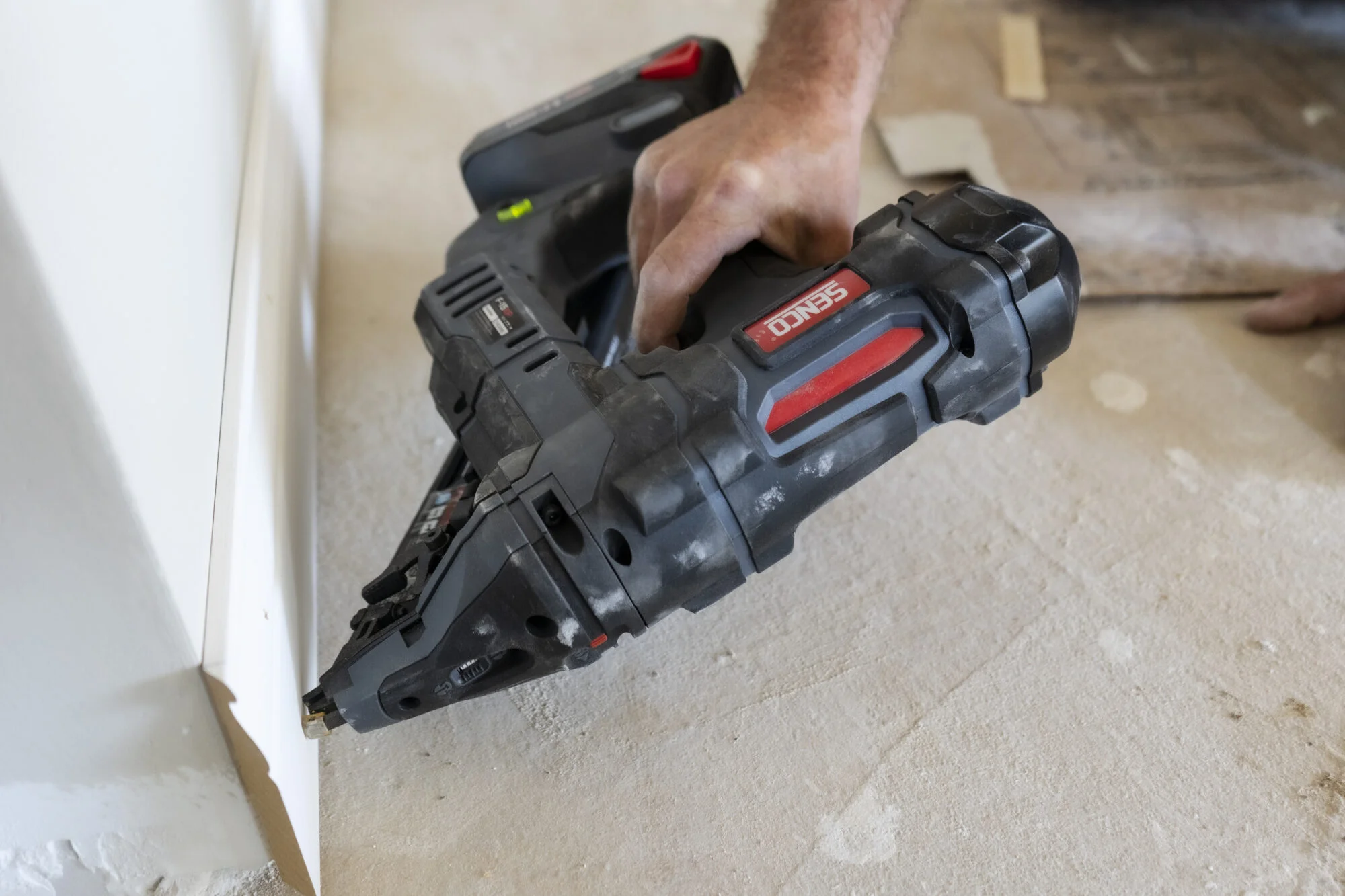
Efficiency matters when you’re working at height, juggling a roll of wrap, a ladder, and your tools. A well-designed cap stapler—like the SENCO CS61H1—feeds caps and staples automatically. You don’t have to fumble with separate fasteners or reload as often, and you’ll notice less fatigue by day’s end. SENCO’s inline feed system and smooth operation also help avoid costly downtime and delays.
Long-Term Performance and Code Compliance
Building codes increasingly require cap-type fasteners for house wrap, especially in areas prone to high wind. Many wrap manufacturers also mandate caps to maintain warranty coverage. Using a cap stapler not only helps ensure compliance—it also protects your workmanship and your customer’s investment.
Hammer tackers, on the other hand, may still have a place for temporary fastening However, they do not offer the same level of holding power or protection.
Cap Staplers for Roofing
Cap staplers are equally effective when it comes to installing roofing underlayment. Whether you’re securing synthetic membrane or asphalt-saturated felt, the advantages are the same: better hold, fewer tears, improved moisture control, and faster installs.
In roofing, underlayment and fasteners are often exposed to foot traffic, intense sun, and gusty winds before shingles go on. Capped fasteners reduce the risk of tearing during this period and improve wind resistance—particularly around seams and overlaps. When fasteners are spaced correctly, they can help create a more watertight barrier.
Codes in coastal and high-wind regions increasingly require capped nails or staples to secure roofing underlayment. For many pros, switching to a cap stapler isn’t just a best practice—it’s a necessity.
Choosing the Right Stapler for the Job
In both wall and roof applications, your stapler needs to do more than just fire—it has to work with you. That means being lightweight, comfortable to handle all day, durable enough to stand up to the job, and engineered to keep your line-of-sight clear and your workflow smooth. And when you hit those parts of the job where you don’t need caps—like window and door jambs—being able to flip a cap-bypass switch and keep driving staples without plastic caps is a time saver.
It’s worth investing in a stapler that does it all. An ergonomic, rugged, versatile tool that doesn’t cut corners on performance is going to serve you better over the long haul—making sure your installs are clean, compliant, and built to last.
Related Posts